todd@beesafemosquitocontrol.com
Silver Spring, MD, USA

A BEE-SAFE WAY TO BE SAFE FROM MOSQUITOS!

Request Quote Now

Forget Citronella, This Plant EATS Mosquitos

Forget Citronella, This Plant EATS Mosquitos
Browse Facebook for long enough and you're bound to see a post titled "Plant These 10 Plants to Keep Mosquitos Away". If you've ever actually tried this, you'll know that it's complete nonsense. Many of the plants mentioned are aromatic herbs like Rosemary and Thyme. The highly concentrated essential oils of these plants, when applied directly to the skin in large quantities, can repel mosquitos for a few hours at most. The idea that a plant just being in the ground nearby would be able to have a similar effect does not pass the smell test (pun intended). 

However, there is one plant (a genus of plants rather) that actually EATS mosquitos. The genus is called Utricularia, commonly known as bladderworts. There are many individual species, including several species native to our service area in Maryland and DC. Some species are terrestrial, but most species are aquatic. The aquatic species are the mosquito eaters, consuming large quantities of the larvae when the larvae are in their first and second instar. Obviously, a bladderwort plant is not going to actually go out and capture adult mosquitos, but it can provide a decent amount of control of mosquito larvae in ponds and other aquatic habitats, especially when combined with fish or a biological larvicide like BTI. Due to its high growth rate, a population could be maintained in a pond and then cuttings could be taken from the pond for use in other areas. Even in unsuitable habitat for the plant to thrive, the bladderwort can still control mosquito larva. 


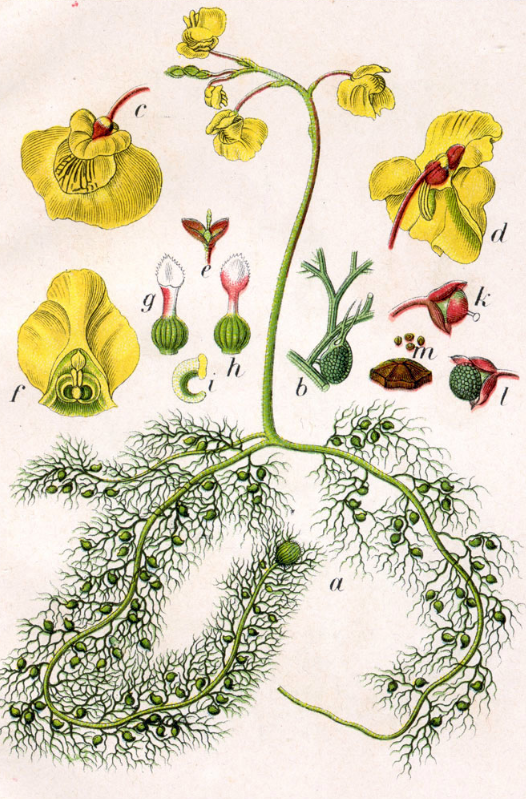
Utricularia Illustration

So how does it do it? The bladderwort plant has numerous small "bladders" along the length of its stems/leaves. As the plant floats rather than rooting into a substrate, its stems function as the leaves. The true leaves are actually the bladders themselves, which have been modified from the typical function of a leaf. The bladders function as tiny traps. They sit idly with an internal vacuum pressure primed to suck in anything nearby once triggered. Tiny trigger hairs sit near the entrance, which, once disturbed, open the bladder, sucking in any nearby prey that disturbed the trigger hair. The plant then consumes the nutrients from its prey. 


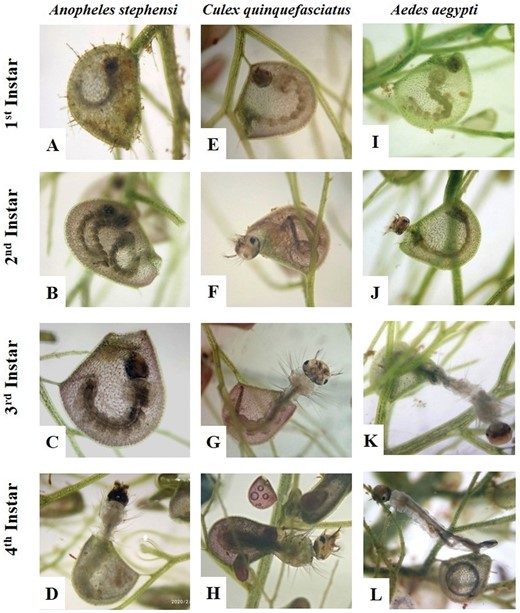
Lab studies have shown that Utricularia can consume almost 100% of mosquito larva within just hours. Field studies have demonstrated efficacy of closer to 70%

Utricularia consuming mosquito larvae

Mohanty et al. 2024


In the DMV region, we recommend Utricularia macrorhiza (studied in the lab study ljnked above) or Utricularia inflata (which we have actually used). Utricularia gibba we have tried without success multiple times in establishing a population in a pond. Both Utricularia species are available from Carnivorous Plant Nursery. If you live outside of the DMV region, be sure to purchase a Utricularia species that is native to your area, as Utricularia species can become invasive outside of their native range.


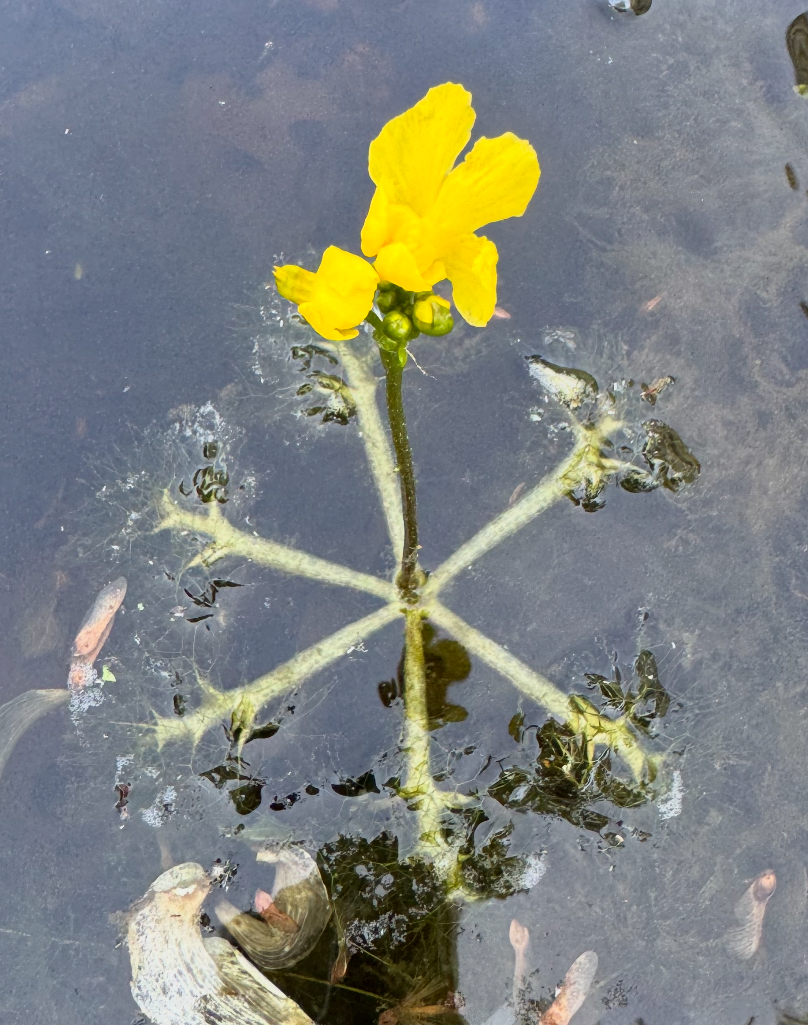
While they do have modestly pretty yellow blooms, we want to temper expectations there. Bladderwort species typically require acidic water with tannins in order to bloom, and especially prefer shallower, peaty regions. But, it doesn't need to bloom to eat mosquito larva! Of the many individual "plants" in my own backyard pond, just one actually bloomed this season (pictured at the top). The floats holding up the bloom are unique to Utricularia inflata, and do not appear outside of when it is blooming. The normal appearance is just the slightly submerged, floating stems and bladders shown below. Care should be taken to not let the Utricularia get inundated with algae, but algicides are never recommended. Instead, maintaining a healthy, balanced pond with good aeration and a high degree of plant coverage shading the pond is best. 
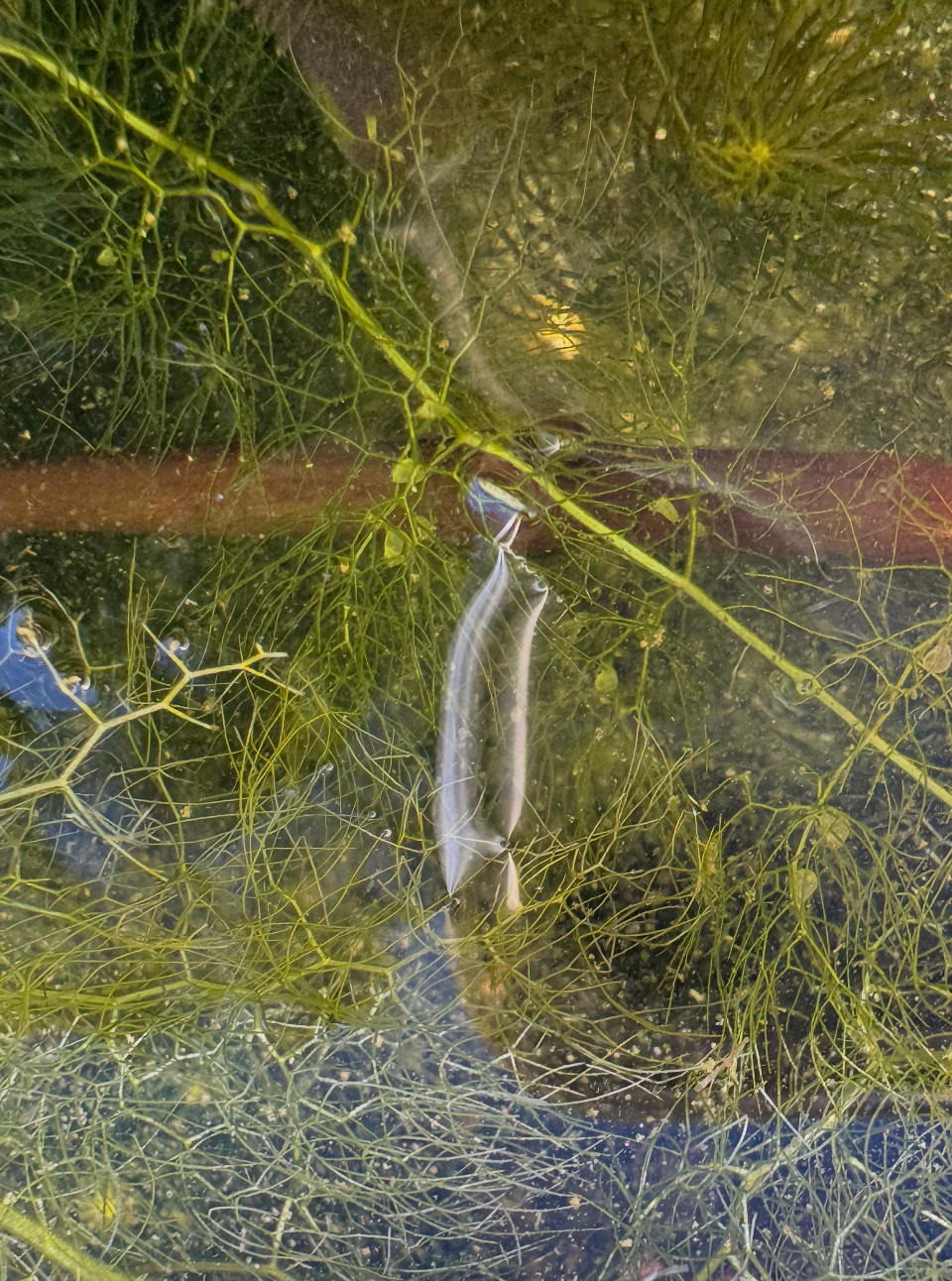
Utricularia inflata submerged underwater showing stems and bladders


Should you install a pond solely to plant Utricularia? Probably not. But, installing a pond does bring with it a whole host of environmental benefits, and contrary to popular belief, a healthy wildlife pond should not be a mosquito breeding ground, especially if planted with Utricularia and/or stocked with native fish. If you are interested in acquiring native fish for your pond, we recommend Central Stonerollers or Swamp Darters for those in our service area. Central Stonerollers are predominantly algae eaters, while Swamp Darters consume invertebrate prey (including mosquito larva!). Both can be acquired from Jonah's Aquarium online. Ponds can also benefit many mosquito predators, such as birds, dragonflies, and bats.