
Bamboo
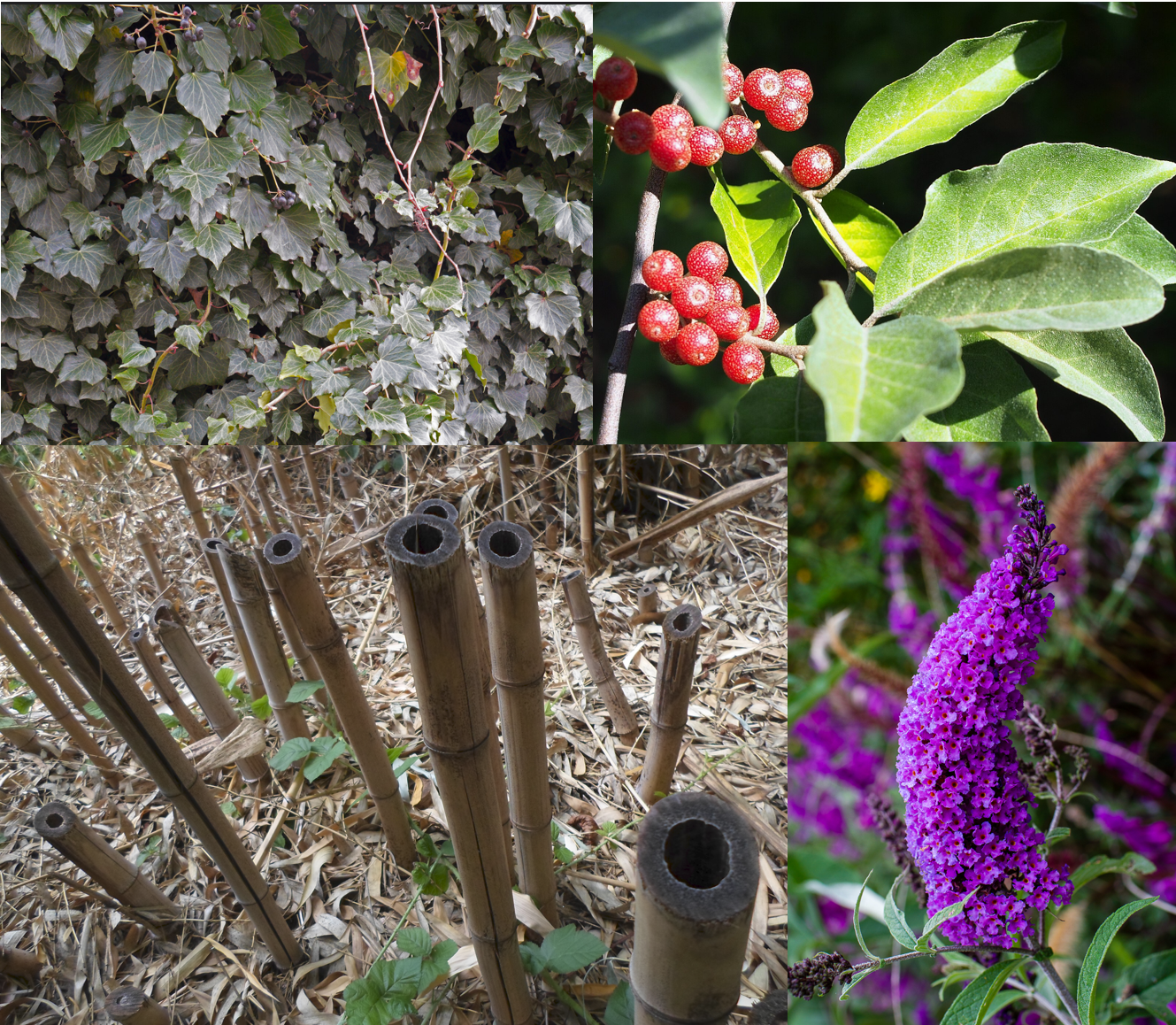
Bamboo’s rapid growth allows it to spread aggressively, choking out native plants and attracting mosquitos in the process. Its hollow stems and culms collect rainwater, creating ideal breeding grounds for mosquito larvae. Out of the nine species of invasive bamboo present in the Mid-Atlantic, two are regulated as Tier 2 invasive plants in Maryland: golden bamboo and yellow groove bamboo, the latter of which can grow at a rate of three feet per day. Removing clumps of bamboo once they are established is of course very laborious.
Our advice is to regularly inspect your yard for bamboo shoots, cut down stalks as close to the ground as possible (ideally below grade), and cut off the culms just above the nodes to prevent water collection in the internodes. We discourage decorative fencing made out of bamboo because it presents ideal habitat for Aedes mosquitos.
English Ivy
English ivy blocks sunlight and provides shaded areas for mosquitos to rest. Introduced in the early 1700s, English ivy’s dense foliage overwhelms native trees and shrubs, reducing biodiversity and aiding mosquito proliferation by retaining moisture that would otherwise evaporate. The waxy leaves and density of the foliage are better at holding in humidity than most other plants. If your yard has English ivy, particularly in tandem with poor drainage, try to trim it back regularly to minimize the creation of dark and soggy spaces. Ideally, replace it with native groundcovers like Allegheny spurge or Virginia creeper.
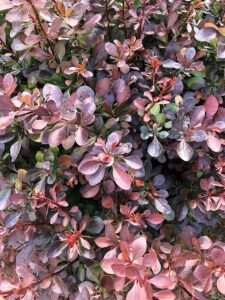
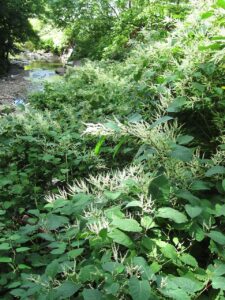
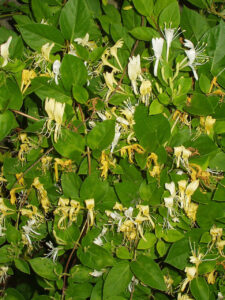
Japanese Stiltgrass, Japanese Barberry, Japanese Knotweed, and Japanese Honeysuckle
While they may not directly host mosquito breeding sites, the aggressive growth and adaptability of these four East Asian invasives deserves a special spotlight. They’ve spread all over our region, leading to ecological disruptions and the creation of mosquito-friendly environments. Not only do mosquito larvae reach adulthood faster when raised on invasive plant detritus (in part because of how prolific the growth and decay patterns of invasive plants are), but once they reach adulthood, both males and females look for leafy, damp vegetation sheltered from wind and sun to rest and seek nectar — things this Japanese quadfecta can certainly provide.Japanese barberry’s dense, thorny clusters make it a popular hedge shrub. Unfortunately, planting it creates hangout spots for adult mosquitos (and ticks). The deciduous ornamental produces abundant seeds and its root systems spread rapidly in an array of conditions. Relative to natives, its leaves are not targeted by browsing deer, its berries last well into winter, and the entire plant is more tolerant to drought. It's better to plant natives like bayberry, inkberry, or winterberry.
Japanese honeysuckle is a climbing vine introduced for its aesthetic value and erosion control. Known mainly for its fragrant flowers, the plant dominates woodland areas and is now prohibited for sale in many states. Its density can weaken or kill trees and shrubs by girdling and shading them. These tangled growths also create humid, shaded zones for mosquitos to rest, especially near water sources. Avoid planting Japanese honeysuckle in landscapes and gardens (research also points to amur honeysuckle as being a major mosquito attractant in residential neighborhoods, so it’s best to avoid and/or remove that as well — luckily, the MDA banned it this past June). Opt instead for native alternatives, such as trumpet honeysuckle.
Japanese knotweed grows in dense, bamboo-like stands that can reach heights of 6–10 feet. It has large, heart-shaped leaves and produces clusters of small, white flowers in late summer. Alas, we implore you not to be drawn in by the plant’s beauty — its extensive root systems deplete nutrients in the soil, preventing native plants from regenerating. Knotweed’s presence near streams, rivers, and wetlands supports mosquito populations by creating resting habitats and breeding grounds (notably, aquatic environments treated with native plant leaves have been shown to have less larval mosquito colonization than ones treated with invasives).
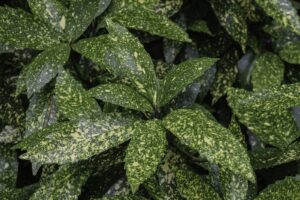
An honorable mention for this section has to be Japanese aucuba (also called spotted laurel). While not as aggressive in terms of its reproduction rate and dispersal mechanisms, its big, glossy leaves capture humidity, which is conducive to mosquito resting habitat. It’s not yet considered invasive in Maryland (much more localized), but can be purchased at plant nurseries in the state (1, 2, 3), and has already made it onto Alexandria, Virginia’s invasive plants watchlist.
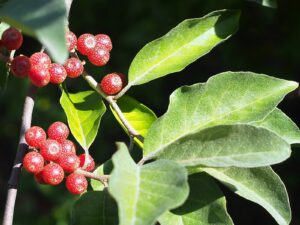
Autumn Olive
Autumn olive, another exotic plant of East Asian origin, grows 10-20 feet tall, blossoming in the summer with fragrant, cream-colored flowers, followed by small red berries in the fall. It spreads rapidly (regenerating almost immediately from cut stumps or root fragments) and displaces native trees and shrubs near mosquito breeding grounds such as streambanks, ditches, wetlands, and forest edges. Its thick canopies of silvery-green leaves create microhabitats in open fields or yards that can serve as daytime resting spots for mosquitos.A 2015 study found that leaf detritus from autumn olive yields significantly higher adult emergence rates of northern house mosquitos compared to detritus from native leaf species (those tested were blackberry, elderberry, serviceberry). In addition to the berry plants mentioned in the study, other viable alternatives to autumn olive include spicebush, gray dogwood, and Southern wax myrtle.
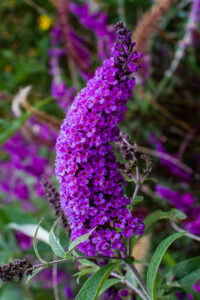
Butterfly Bush
Butterfly bush is a deciduous shrub with arching stems and purple, white, or pink flowers. Native to Central China, it is known to readily invade disturbed sites and riparian areas, reaching the East Coast in the early 20th century. New York Ironweed, New England Aster, and Sweet Pepperbush are a few recommended alternatives.A 2016 field study found that butterfly bush is more attractive to Asian Tiger mosquitos than North American native plants (like yaupon) and even other non-native plants (like sweet viburnum, Indian hawthorn, burford holly, and Japanese boxwood). The number of mosquito eggs recovered from containers near flowering butterfly bushes was significantly higher than in containers without nearby flowering butterfly bushes, regardless of whether there was any additional sugar provided to them for sustenance. This indicates that the Asian Tiger mosquito is drawn to the high nectar content of the butterfly bush more so than the flowers or fruits of other bushes.
In addition to attracting mosquitos, the butterfly bush does indeed attract butterflies too — don’t use that as a reason to plant it though! Caterpillars (the larval stage of butterflies) cannot survive on butterfly bushes because the plant does not provide the necessary food source (leaves) for them to develop and complete their life cycle. But butterflies do not know better — they will still opt for the delicious nectar of the butterfly bush over native larval food sources.